

Understanding the legal and commercial distinction between registered vs unregistered design rights in the UK is essential for any business launching physical products, bespoke packaging, or digital user interfaces. While the visual appearance of a product is often what drives consumer demand, relying on the wrong design right leaves your product margins exposed to rapid lookalike copying.
Yet, design protection in the UK involves navigating an intricate framework of overlapping registered and unregistered rights. Failing to secure a registration prior to public disclosure, depending on an unsuitable right, or an imprecisely registered design risks leaving your goods completely exposed to low-cost imitators.
This guide details how to strategically approach UK registered designs, the automatic protection offered by UK unregistered design rights (UDR) and the additional protection offered by supplementary unregistered designs (SUD) to secure your commercial advantage.
UK registered designs
When it comes to design rights, the most powerful weapon in a product designer’s arsenal is a precisely prepared UK Registered Design. Managed by the UK Intellectual Property Office (UKIPO), it protects the overall visual appearance of a product, including its shape, configuration, pattern and ornamentation. Some key aspects of UK registered designs include:
- Speed and economy – In contrast to trade mark applications, which are subject to formal examination and published in the trade mark journal alerting others who may oppose its registration… A UK Registered Design provides an exceptionally swift, budget-friendly route to protection, with rights granted in some cases within days. However, there are some discussions that this may change in the future. It is also important that someone applying for a registered design prepares it with an understanding of how to best protect the core visual features without accidentally narrowing the scope of the monopoly.
- Robust exclusive monopoly – Registration secures a strict legal monopoly lasting up to 25 years (subject to renewal every 5 years). Should a dispute arise, an infringement occurs whenever a competitor’s product leaves the same “overall impression” on an informed user. Crucially, with the registered design right there is no obligation to demonstrate intentional copying; even independently developed creation is seen to infringe registered exclusive rights.
“Business leaders all too often overlook registered designs, operating under the belief that patents and trade marks are the key IP instruments that matter. This oversight is often a major strategic misstep. A registered design offers a tangible certificate enabling IP specialists, such as ourselves, to swiftly enforce Amazon takedowns and coordinate customs seizures. It remains the most commercially efficient (yet widely underused!) IP right in the UK.”
Elizabeth Ward, Founder and Principal, Virtuoso Legal
The “grace period” trap
To be validly registered, a design must be novel (i.e. new). The UK offers what’s known as a 12-month grace period. If you launch a product or showcase it at a trade fair, you have exactly 12 months to file a registered design application. If you miss this window, the design enters the public domain, and any subsequent registration can be invalidated.
Unregistered design rights: A safety net
If you fail to register your design, or if you operate in a fast-moving industry (e.g. “fast fashion”) where registering every single garment is not the optimal approach, you can seek to rely on your unregistered (and thus, automatic) rights.
At the time of writing, UK law currently provides two overlapping unregistered systems:
UK Unregistered Design Right (UDR)
UDR arises automatically when an original design is recorded in a design document or an article is made to the design.
- What it protects: It strictly protects the 3D shape and configuration of an article (internal or external). It explicitly does not protect 2D surface decoration, patterns, or colours.
- Duration: It lasts for a maximum of 15 years from the end of the year it was first recorded, or 10 years from the end of the year it was first sold.
Supplementary Unregistered Design (SUD)
Created post-Brexit to mirror the old EU Unregistered Community Design, the SUD arises automatically when a design is first disclosed to the public in the UK.
- What it protects: Unlike UDR, the SUD protects the 2D surface decoration, colours, lines, and textures of a product, as well as its 3D shape.
- Duration: It is highly fleeting, lasting only 3 years from the date of first disclosure.
The tactical burden of unregistered rights
While unregistered rights arise automatically and cost nothing, enforcing them in court is heavily burdensome.
To succeed in an unregistered design right claim, you cannot simply show that the competitor’s product looks similar. You must prove actual, deliberate copying.
This requires a forensic “evidentiary marathon.” We must demonstrate that the competitor had access to your design, and that the similarities are so striking they could only result from copying, not independent creation. This drastically increases the legal fees and uncertainty in litigation compared to enforcing a registered design.
Technical exclusions: “must-fit”, “must-match” and the CAD filing trap
Two critical pitfalls frequently catch product manufacturers off guard when enforcing design rights in the UK courts. They are:
- The “must-fit” and “must-match” exclusions – UK Unregistered Design Right (UDR) explicitly excludes features that enable one product to physically connect to another (“must-fit”, such as a spare part mounting or bracket) or features dependent on the appearance of another article of which it forms an integral part (“must-match”, such as an automotive body panel). By contrast, a UK Registered Design can protect visible component parts that remain visible during normal use.
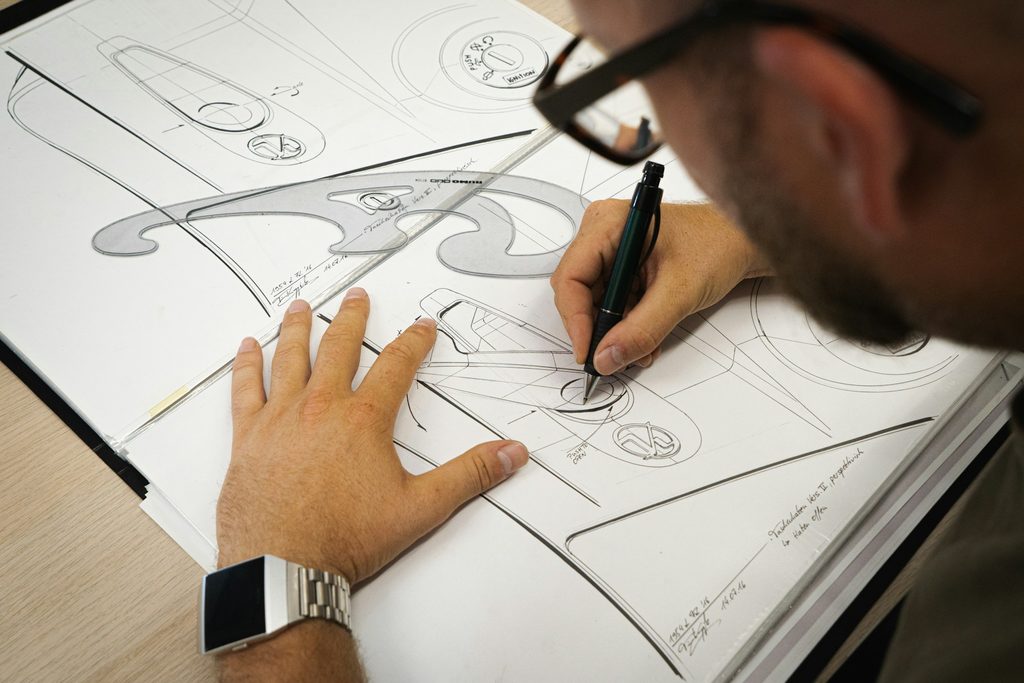
- The raw CAD/Render trap: In a UK Registered Design application, the visual illustrations submitted to the UKIPO define the exact legal boundaries of your monopoly. Submitting raw engineering CAD files or full-colour photorealistic renders often restricts your protection without you realising it. The exact surface textures, shading or internal contours present on the representation become part of the registration, potentially allowing a competitor to sidestep infringement by simply changing certain elements. Instead, registered design right applications are best prepared with an understanding of how to best represent the critical and commercially appealing aspects of the design (these typically look like stripped-back, black-and-white line drawings; using dashed lines to disclaim non-essential elements). In essence, drawings for the application are best prepared specifically for that purpose, to avoid losing protection over critical aspects of the design, or providing inroads for copycats and imitators.
A UK registered design grants a strict 25-year statutory monopoly over both 2D surface decoration and 3D product shape without requiring you to prove that a competitor copied you. Unregistered design rights arise automatically upon creation or disclosure, last for a shorter period (3 years for SUD or 10–15 years for UK UDR), and require the claimant to prove actual, deliberate copying in court.
Yes, provided you act within 12 months of your first public disclosure. Under the Registered Designs Act 1949, the UK operates a 12-month novelty grace period. This allows designers and brands to test-market a product publicly for up to 12 months before filing a UK registered design application without their own disclosures destroying the novelty of the design.
The illustrations submitted to the UKIPO define the exact legal scope of your registered design monopoly. If you submit full-colour 3D renders or detailed engineering CAD drawings showing surface shading, logos, or internal screw threads, a competitor may avoid infringement simply by omitting those secondary details. Precision black-and-white line drawings using dashed lines for disclaimed features provide the broadest protection.
Are copycats eroding your product margins?
Do not rely on the uncertainty of unregistered rights. Contact our specialist IP protection team to audit your product portfolio and execute a rapid, cost-effective registered design strategy.